The Ultimate Budget-Friendly Flaky Butter Croissants for Effortless Gourmet Breakfasts
Bake stunning, flaky butter croissants at home without the high cost. Expert tips for budget-friendly, perfect laminated pastry.

Achieving those impossibly flaky, golden butter croissants at home doesn't require a professional patisserie budget; it requires understanding the lamination process and smart ingredient sourcing. These croissants deliver the rich, buttery decadence you crave without the intimidation factor, making gourmet breakfast feel genuinely achievable for budget-conscious home cooks.
Forget expensive bakery runs every weekend. Learning to bake truly flaky butter croissants is a rewarding skill that transforms simple morning routines into moments of pure, buttery indulgence. Whether you are planning an easy weekend brunch for friends or simply elevating your weekday coffee ritual, this recipe proves that luxury baking can be budget-friendly when approached with patience and proper technique.
Why You'll Love This Budget-Friendly Baking Project
- Maximum Flavor, Minimum Waste: Utilizing butter effectively through lamination yields superior flavor without requiring premium, imported ingredients.
- Budget-Conscious Luxury: This recipe focuses on technique over extravagance, keeping ingredient costs manageable for regular home cooking.
- Impressive Results, Low Effort (Once Learned): While lamination takes time, the actual hands-on work per batch is straightforward, leading to stunning, bakery-quality results.
- Versatile Meal Planning: Perfect for weekend brunches, quick weekday breakfasts, or even slicing and serving alongside soup for an easy meal plan upgrade.
Mastering the Science: What Makes Croissants Flaky?
Flakiness isn't just about butter; it's about **steam**. When you fold dough around cold butter, you create thousands of alternating layers of dough and butter. During baking, the water in the butter and dough turns to steam, forcing the layers apart before the butter fully melts, resulting in that signature shatteringly crisp exterior and tender interior. **Temperature control is non-negotiable** for success.
The Role of Cold: A Critical Caveat
If your butter or dough warms up too much during the folding process, the butter will mix into the dough instead of staying in distinct, separate layers. This results in a tough, dense pastry, not a flaky one. **Keep everything cold**: butter, dough, and even your workspace should be cool.
Essential Tools for Lamination Success
While you can attempt this with basic kitchen tools, specific equipment makes the process infinitely easier and more consistent, which is key for reliable budget baking.
Tool Purpose Budget Tip Heavy Rolling Pin Even dough thickness; prevents tearing. A sturdy, non-stick French rolling pin works best. Plastic Wrap/Cling Film Wrapping dough for chilling; prevents sticking. Use heavy-duty wrap; avoid cutting it too tightly around the dough. Cool Workspace Maintaining dough temperature during folding. Work in a slightly cool kitchen (68-70°F / 20-21°C) if possible.Ingredient Deep Dive: Budget-Friendly Excellence
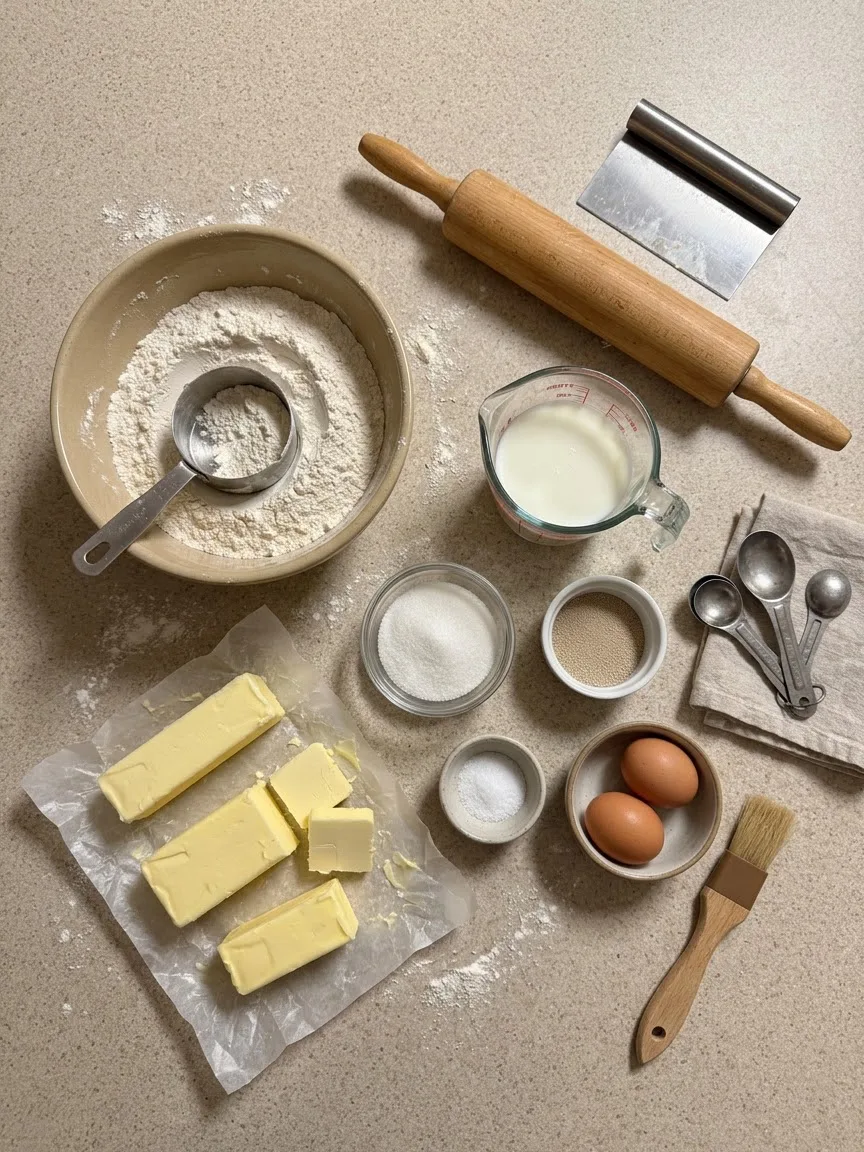
We are focusing on maximizing flavor while minimizing unnecessary cost. High-quality, high-fat butter is the star, but standard all-purpose flour works perfectly well.
Ingredient List:
All-Purpose Flour: 500g (High protein content helps structure)
Cold Unsalted Butter (High Fat, 82%+): 250g (Crucial for lamination; look for good value blocks)
Whole Milk (Very Cold): 100ml
Granulated Sugar: 50g (For flavor and browning)
Instant Dry Yeast: 7g (1 packet)
Salt: 10g
Step-by-Step Lamination: The Folding Ritual

This process requires patience, not speed. Do not rush the chilling periods; they are as important as the rolling.
- Dough Preparation: In a large bowl, mix the flour, sugar, yeast, and salt. Gradually incorporate the cold milk until a shaggy dough forms. Knead briefly (5-7 minutes) until smooth, then wrap and **chill for a minimum of 2 hours** (or overnight).
- Butter Block: Shape the cold butter into a precise square or rectangle, matching the eventual size of the dough block. Ensure it is firm, not soft.
- Enclosing: Roll out the chilled dough into a rectangle slightly larger than the butter block. Place the butter block in the center, fold the dough edges over the butter to completely encase it, creating a neat, sealed packet.
- The Folds (Turns): Perform three single 'book folds' (or letter folds). Each fold involves rolling the dough out, folding one-third over the center, and then the other third over that (like folding a business letter). **Chill the dough for 45-60 minutes between *every* fold.**
- Shaping: After the final chill, roll the dough into a long, even rectangle (approx. 40x60cm). Cut uniform triangles (about 10-12 cm base). Gently stretch the base into a point to form classic croissants.
- Proofing: Place on parchment-lined trays. Cover loosely and let proof in a warm, draft-free spot for 2-3 hours, or until visibly puffy and jiggly—**do not over-proof**; they will collapse.
- Baking: Preheat oven to 400°F (200°C). Brush generously with an egg wash (1 egg + 1 tbsp milk). Bake for 18-22 minutes, or until deeply golden brown and crisp.
Advanced Technique Deep Dive: Troubleshooting Common Croissant Failures
As an SEO content strategist focused on practical value, I must address the pitfalls. Most failures stem from temperature or handling.
Issue 1: Dough is Tough, Not Flaky
Cause: Butter melted into the dough during rolling. **Solution:** Work quickly and keep the dough/butter below 65°F (18°C). If it warms, immediately return the entire block to the refrigerator for 30 minutes before continuing.
Issue 2: Croissants are Flat or Dense
Cause: Insufficient proofing time, or the dough was over-worked during initial kneading. **Solution:** Ensure the final proofing allows for significant puffing. Gentle handling during shaping and proofing is crucial; **do not press them down**.
Issue 3: Butter Leaks Out During Baking
Cause: The dough was not sealed correctly around the butter block before the first fold. **Solution:** Always press the edges firmly together after encasing the butter. A small seal prevents migration.
Budget Variations & Meal Plan Integration
Since Flavor Reel focuses on budget-friendly cooking, let's look beyond plain butter. These croissants are a fantastic base for easy, inexpensive meal plans.
- Savory Upgrade: Before baking, brush with an egg wash mixed with a sprinkle of **Parmesan and dried herbs** (thyme/rosemary). Serve alongside a quick sautéed mushroom and spinach hash for a complete, budget-friendly brunch.
- Sweet Simplicity: Dust lightly with **powdered sugar** immediately after cooling. Serve with a dollop of low-cost Greek yogurt instead of expensive whipped cream.
- Meal Prep Hack: Bake a large batch. Store them in an airtight container at room temperature for up to 3 days, or freeze immediately (unbaked, or baked and cooled) for up to 3 months. Reheat in a 30-second microwave burst or, ideally, in a toaster oven for crispness.
Sensory Experience and Storage Longevity
The ideal flaky butter croissant should shatter when bitten, possess a deep, warm golden hue, and smell intensely of toasted, sweet butter. The interior should be soft, airy, and not dense.
Storage Protocol: Store leftovers in an airtight container at room temperature up to 3 days. For longer storage, freeze them. When ready to eat, **do not thaw completely**; reheat directly from frozen in a 350°F (175°C) oven for 15-20 minutes to restore crispness.
Recipe Card
Ingredients
- 500g All-Purpose Flour
- 250g Cold Unsalted Butter (82%+)
- 100ml Whole Milk (Very Cold)
- 50g Granulated Sugar
- 7g Instant Dry Yeast
- 10g Salt
Instructions
- In a large bowl, mix the flour, sugar, yeast, and salt. Gradually incorporate the cold milk until a shaggy dough forms.
- Knead briefly (5-7 minutes) until smooth, then wrap and chill for a minimum of 2 hours.
- Shape the cold butter into a precise square, matching the dough size. Roll out the chilled dough into a rectangle slightly larger than the butter block.
- Place the butter in the center, fold the dough edges over the butter to completely encase it, creating a neat, sealed packet.
- Perform three single 'book folds' (letter folds). Chill the dough for 45-60 minutes between *every* fold.
- After the final chill, roll the dough into a long, even rectangle (approx. 40x60cm). Cut uniform triangles (about 10-12 cm base). Gently stretch the base into a point to form classic croissants.
- Place on parchment-lined trays. Cover loosely and let proof in a warm, draft-free spot for 2-3 hours, until visibly puffy.
- Preheat oven to 400°F (200°C). Brush generously with an egg wash (1 egg + 1 tbsp milk). Bake for 18-22 minutes, or until deeply golden brown and crisp.
Frequently Asked Questions About Homemade Croissants
Addressing common queries helps solidify the recipe's accessibility for the home cook.
Q: Can I use margarine instead of butter to save money?
A: While cheaper, **no**. The high-fat, specific melting point of butter is essential for clean lamination. Margarines often contain stabilizers or water that disrupt the steam-flakiness. Stick to high-quality, high-fat butter for the best result.
Q: How long does the entire process take?
A: Due to necessary chilling times, this is not a 2-hour recipe. Plan for **4-6 hours** of active and passive chilling time, plus 20 minutes of baking. This is an investment in a superior breakfast.
Q: Can I make these ahead of time?
A: Yes, the dough can be mixed, shaped, and frozen *before* proofing. Thaw overnight in the refrigerator, then proof as directed. This is ideal for easy meal planning.
Q: What is the difference between a croissant and a pain au chocolat?
A: The difference is the filling. A croissant is traditionally filled only with butter, creating the layers. A pain au chocolat incorporates one or more pieces of dark chocolate within the lamination layers.
This comprehensive guide moves beyond just providing a recipe; it equips the budget-conscious home cook with the **technical knowledge** to troubleshoot, adapt, and succeed. Mastering flaky butter croissants proves that extraordinary flavor doesn't require extraordinary spending—just precise technique and patience.
Final Actionable Step for Flavor Reel Readers
Don't let the complexity scare you. Start with the dough preparation and the first fold. Once you achieve that first successful, crisp layer, the rest becomes muscle memory. **Commit to the chilling times**; they are your secret weapon against dense pastry. Next weekend, replace the plain croissant with a Parmesan-herb variation and serve it alongside a simple roasted vegetable side for a truly elevated, yet entirely budget-friendly, meal plan centerpiece.
The Ultimate Budget-Friendly Flaky Butter Croissants for Effortless Gourmet Breakfasts
Bake stunning, flaky butter croissants at home without the high cost. Expert tips for budget-friendly, perfect laminated pastry.
Ingredients
- 500g All-Purpose Flour
- 250g Cold Unsalted Butter (82%+)
- 100ml Whole Milk (Very Cold)
- 50g Granulated Sugar
- 7g Instant Dry Yeast
- 10g Salt
Instructions
- In a large bowl, mix the flour, sugar, yeast, and salt. Gradually incorporate the cold milk until a shaggy dough forms.
- Knead briefly (5-7 minutes) until smooth, then wrap and chill for a minimum of 2 hours.
- Shape the cold butter into a precise square, matching the dough size. Roll out the chilled dough into a rectangle slightly larger than the butter block.
- Place the butter in the center, fold the dough edges over the butter to completely encase it, creating a neat, sealed packet.
- Perform three single 'book folds' (letter folds). Chill the dough for 45-60 minutes between *every* fold.
- After the final chill, roll the dough into a long, even rectangle (approx. 40x60cm). Cut uniform triangles (about 10-12 cm base). Gently stretch the base into a point to form classic croissants.
- Place on parchment-lined trays. Cover loosely and let proof in a warm, draft-free spot for 2-3 hours, until visibly puffy.
- Preheat oven to 400°F (200°C). Brush generously with an egg wash (1 egg + 1 tbsp milk). Bake for 18-22 minutes, or until deeply golden brown and crisp.